
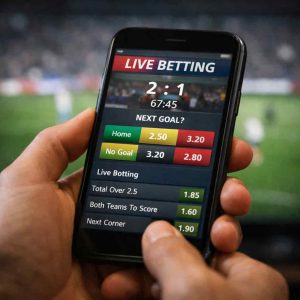
 Live betting, also called in-play betting, looks like the modern version of sports gambling. Odds move in real time. You can react to what you see on the screen, whether you’re watching a match unfold or checking prices on platforms like Esport Bet bet. There’s always another market opening, another chance to win something back. That’s the appeal. And it’s also the problem. Most bettors lose money betting in-play, often faster than they do with pre-match bets. Not because live betting is rigged, but because it exposes a few weaknesses that sportsbooks are built to exploit. Emotional decisions. Poor pricing. And a speed disadvantage that bettors can’t overcome. Here’s how it usually goes wrong.
Emotional decisions take over.
Live betting encourages reaction, not planning. Something big happens. A goal, a red card, a missed penalty. Odds swing sharply, and bettors feel pressure to act before the market moves again. That pressure leads to emotional betting. A typical example is chasing losses. A bettor backs a team pre-match. They concede early. The bettor feels unlucky, maybe even angry. Live odds now offer a “better price” on the same team. So they double down, not because the bet is good, but because it feels like a chance to fix the situation.
Another example is overconfidence after short-term success. A few live bets win in a row. The bettor starts trusting their instincts more than their analysis. Stakes increase. Discipline fades. Live betting also magnifies recency bias. What just happened feels more important than what matters over the course of the match. A team dominates possession for five minutes and suddenly looks “on top,” even if the underlying matchup hasn’t changed. Bettors react to momentum that often disappears just as quickly. Sportsbooks know this. In-play markets are designed to keep bettors engaged emotionally. Fast updates. Constant odds changes. Notifications that suggest an opportunity. The more emotional the decision, the better it is for the house.
Prices are usually worse than they look.
Many bettors believe live betting offers better value because odds adjust to new information. In theory, that’s true. In practice, the pricing is often worse than pre-match markets. In-play odds carry higher margins. Sportsbooks increase their edge to account for volatility and risk. That means even if you’re right more often than not, you’re paying extra for the privilege of betting live.
There’s also the issue of overreaction. Markets often move too far after a single event. A goal can swing win probabilities dramatically, even in sports where scoring early doesn’t guarantee anything. Bettors see a significant price change and assume value. But the adjustment usually benefits the bookmaker, not the bettor. Cash-out features add another layer of poor pricing. They’re marketed as a safety net. In reality, they’re almost always priced in the bookmaker’s favor. Bettors lock in small losses or reduced profits, while the sportsbook removes risk at a discount.
Then there are novelty markets. Next goal scorer. Next point. Next corner. These are fun, but they’re heavily margined and difficult to price accurately as a bettor. They encourage frequent bets with little edge and lots of turnover.
The key issue is simple. Live betting markets are efficient where they need to be and expensive where bettors are most active. That’s not an accident.
You’re always behind on speed.
This is the most significant disadvantage, and it’s the one most bettors underestimate. When you watch a live match on TV or a stream, you’re seeing a delayed feed. That delay might be a few seconds. Sometimes it’s longer. Sportsbooks, on the other hand, are connected directly to official data feeds or scouts inside the stadium. They see events before you do. That means by the time you click a bet based on something you just watched, the bookmaker already knows what happened. If a goal, foul, or injury is about to impact the market, odds will be suspended or adjusted instantly. If you’re betting into that moment, you’re usually getting the worst of it.
Some bettors think they can beat this by reacting fast. Or by watching multiple screens. Or by trusting their gut before the market moves. But speed isn’t just about reflexes. It’s about access to information. And bettors don’t have it. Even professional traders who bet live tend to work with models, automation, or direct data access. Casual bettors are playing a different game entirely. Sportsbooks also manage latency risk aggressively. If a bettor consistently beats closing in-play prices, limits follow quickly. That alone tells you how hard it is to win long-term betting live.
The illusion of control
Live betting feels skillful. You’re watching the game. You’re making decisions in real time. It feels active, not passive. That sense of control is misleading. Most live betting decisions are made with incomplete information, under time pressure, and with emotional bias. The bettor feels involved, but the sportsbook controls the rules, the prices, and the timing. Pre-match betting has its own problems, but at least it allows time for analysis and restraint. Live betting compresses everything into moments. Think less. Bet more. Repeat. That’s why losses pile up faster.
Why sportsbooks push in-play so hard
If live betting were dangerous for bookmakers, it wouldn’t be promoted the way it is. Yet it dominates modern betting apps. It’s front and center. That’s because it works. In-play betting increases bet frequency, emotional engagement, and turnover. It exploits poor pricing tolerance and speed disadvantages. And it turns sports viewing into a continuous decision loop. For most bettors, that combination is a losing one.
Final thoughts
Live betting isn’t unbeatable in theory. But for the vast majority of bettors, it’s a trap disguised as opportunity. Emotional decisions replace strategy. Prices quietly worsen. And the speed gap never closes. If you’re betting live for entertainment, that’s one thing. But if you expect to win consistently, in-play betting is stacked against you from the start. And the more it feels like you’re in control, the more careful you should be.